
Planning for 2026: How Visionary Brands Build Growth Roadmaps That Actually Work
Every year around this time, we see the same pattern: brands are sprinting toward the finish line of Q4 while trying to plan for the year ahead. And the truth is, most teams don’t actually have the space - or the framework - to step back and think beyond the next campaign.
But the DTC brands who consistently grow year after year?
They do something different.
They plan early.
They plan with intention.
And they design their growth before the year begins.
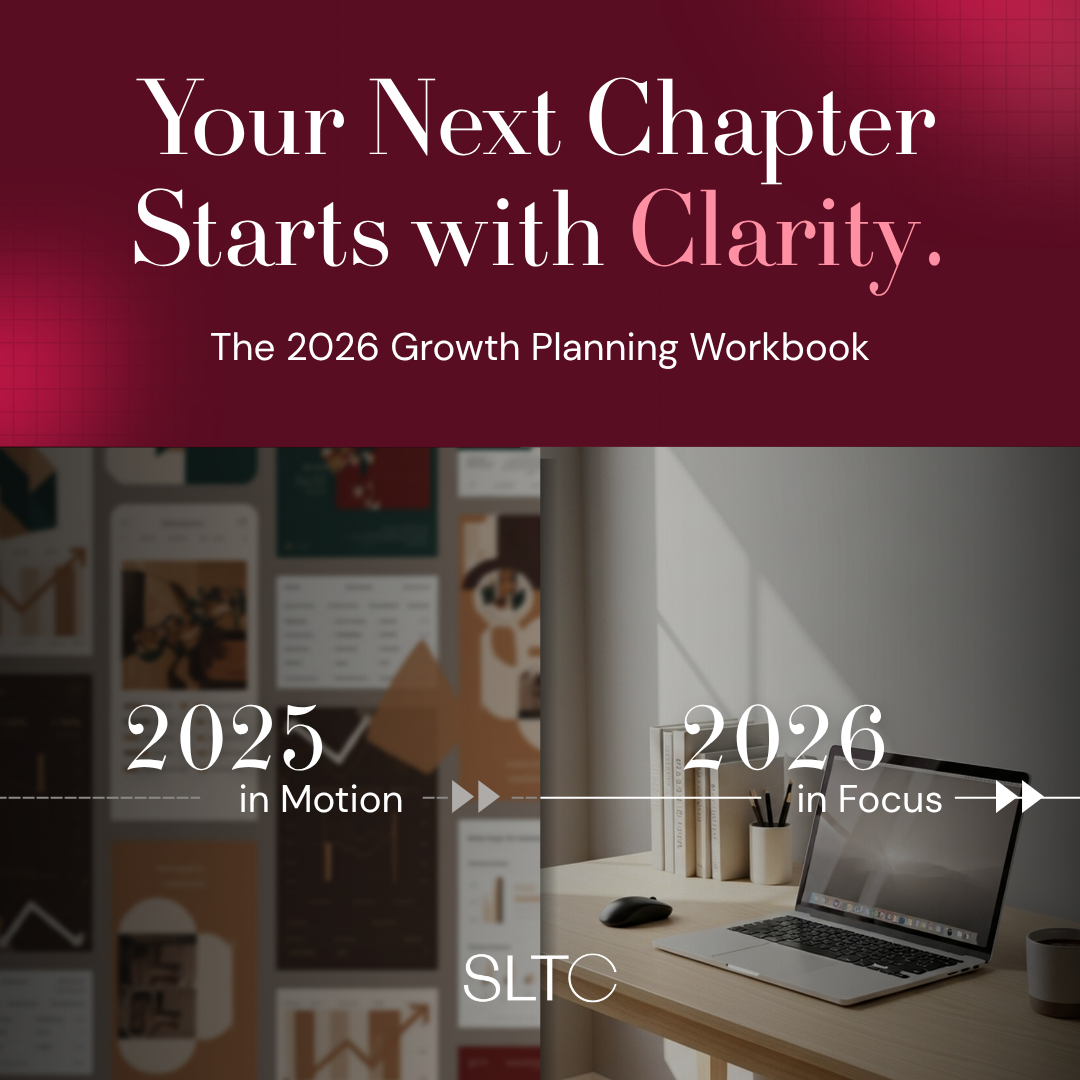
This is exactly why our team created the SLTC 2026 Growth Planning Workbook - a short, interactive tool to help founders and marketing leaders reflect on what worked, refine their vision, and map out a plan rooted in clarity rather than chaos.
And to support it, here’s our perspective on why the smartest brands are already planning for 2026 (and how we help them do it).
Why Planning a Year Ahead Matters, Especially Now
In 2025, our team worked closely with brands across fashion, beauty, accessories, and DTC as they navigated fast-moving trends, shifting budgets, and an increasingly noisy digital landscape. The common thread?
The brands who performed best weren’t the ones doing “more.”
They were the ones doing the right things, at the right times, with the right partners.
Planning a year ahead gives brands an advantage that reactive marketing never can:
- Clearer priorities (instead of chasing trends week by week)
- Better resourcing (knowing when to scale up support or shift investment)
- More aligned storytelling (where brand, product, and performance work together)
- Room to innovate (instead of only optimizing what already exists)
It’s not about predicting the future.
It’s about designing a direction.
Where Strong Annual Plans Begin: Looking Back Before Looking Forward
One of the first exercises in our 2026 Workbook is simple but transformative:
reflecting on what actually worked in 2025.
Not just top-line revenue or ROAS, but the human side of your growth:
- Which partnerships or vendors genuinely moved the needle?
- Which campaigns “felt effortless” because they were aligned with your brand?
- What content resonated most deeply with your audience?
- Where did you see real, sustainable momentum vs. forced results?
This kind of reflection is something we practice internally with every client.
It helps us recognize patterns, uncover hidden wins, and avoid repeating strategies that looked good on paper but didn’t deliver meaningful impact.
It’s also the foundation of any strategic roadmap worth building.
2026 Is Already Taking Shape - Here’s Where We See Brands Evolving
While creating the workbook, our team spent time mapping out the trends clients are already responding to. For 2026, a few themes keep coming up:
1. Creators + Community Over Pure Paid Performance
The most successful brands are building ecosystems—not just campaigns. That means integrating influencers, UGC, and community storytelling into core growth strategies.
2. Smarter, Human-Led AI Workflows
AI won’t replace your brand’s voice, but it will shape how fast you can move. The opportunity is in blending AI efficiency with human intention.
3. Paid + Organic Working Together
Performance brands are realizing they can’t rely solely on ads. Organic strategy - SEO, content, community - is back in the spotlight as a growth engine, not an afterthought.
4. Leaner, More Purposeful Teams
Whether in-house or via partners, brands are prioritizing support that feels strategic, specialized, and emotionally aligned.
These are the shifts we help clients navigate daily, and they’re built directly into how the workbook guides long-term planning.
Turning Vision Into a Plan: The 2026 Alignment Grid
Annual planning often breaks down because brands think in “campaigns” rather than “growth areas.” The Alignment Grid in our workbook flips that.
You simply outline:
- Your focus areas
- Your goals
- Your metrics of success
It’s structured enough to create accountability—but flexible enough to shift as your business evolves.
Our team uses similar alignment tools internally when we onboard new clients. It’s how we ensure:
- Every channel serves the same purpose
- Storytelling and performance ladder up together
- Partners and resources support actual business needs
Because growth doesn’t happen by accident. It happens when everything points in the same direction.
What Happens After the Plan? (This Is the Part Most Brands Miss.)
A roadmap is only powerful if it leads somewhere—and this is where many brands stall.
That’s why the final section of the workbook is intentionally practical:
- What needs fresh eyes or external expertise?
- What’s the biggest barrier to your next level?
- What’s one bold idea that deserves space in Q1?
These are the questions we ask clients in our strategic planning sessions.
They turn a plan into momentum.
Final Takeaway: Visionary Brands Don’t Wait—They Design Their Growth
Our seasoned strategists have seen this across dozens of brands: planning a year ahead doesn’t make you rigid, it gives you freedom.
Freedom to say no.
Freedom to invest wisely.
Freedom to build with confidence rather than urgency.
The 2026 Growth Planning Workbook is designed to help you begin that clarity.
And if you want support refining your roadmap, pressure-testing your priorities, or identifying the right partners and tactics - we’re here to help.