
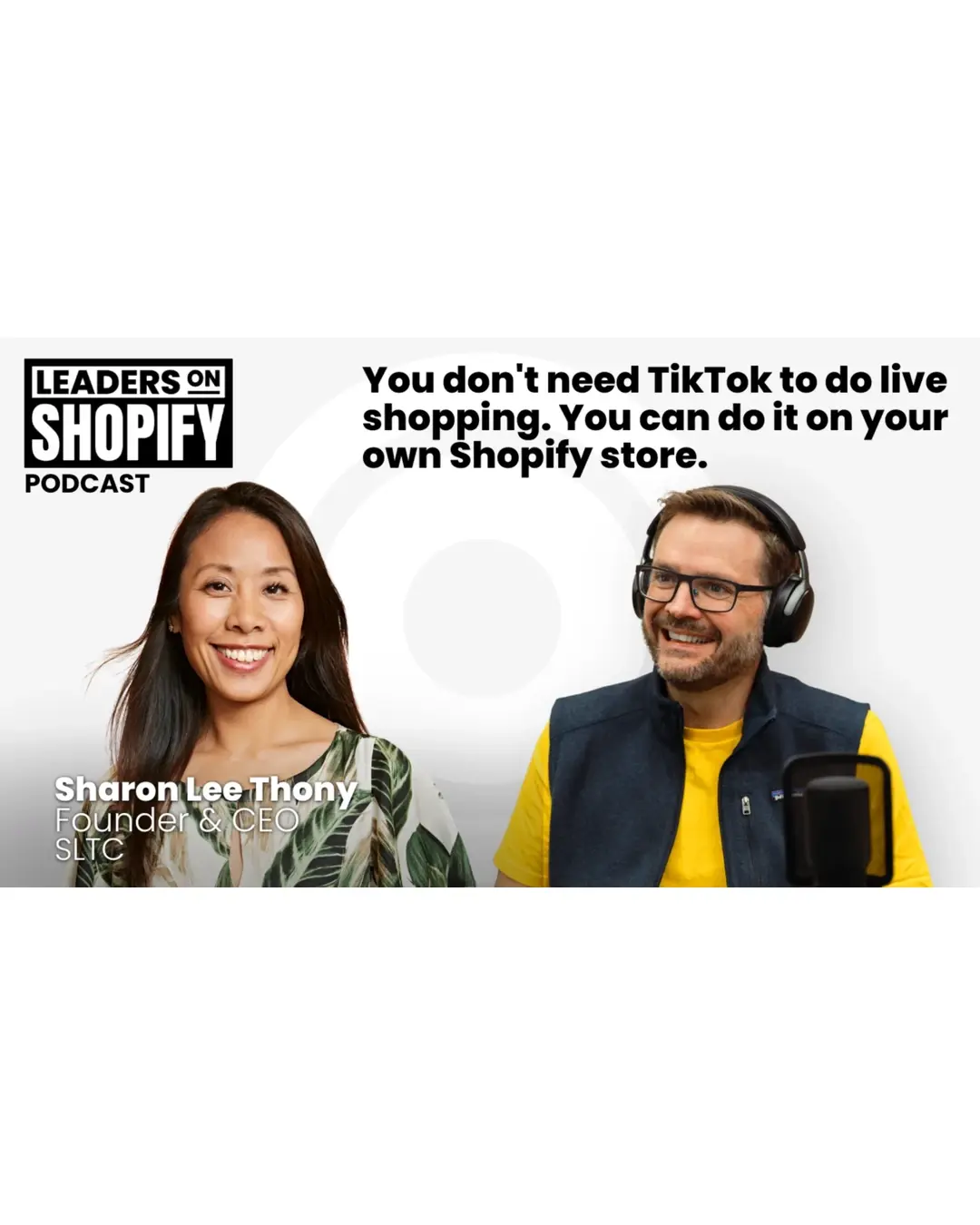
Our founder, Sharon Lee Thony, built STLC, sold it to Fiverr, and then bought it back. So when she says most brands have lost their voice, it's worth hearing her out.
On a recent episode of Leaders on Shopify, SLTC's founder and CEO sat down with host John to talk about what's actually moving the needle for growth-stage Shopify brands right now. By the end of this post, you'll have a new sales channel most brands aren't using yet, a gut check on where your ad budget is going, and a simple way to think about AI agents.
Take live shopping off social and onto your own site
Plenty of brands already go live on TikTok and Instagram. At SLTC we’ve been bringing that same format into clients' Shopify stores, using an app called Live Me Up.
Here's how it works:
- You stream directly on your Shopify site, the same way you would on Instagram Live.
- As you talk about a product, you link it from your Shopify catalog right into the feed.
- Viewers add to cart and check out without leaving the stream.
- Everyone watching sees how many people have added items and checked out, which builds momentum.
The real win is the audience you keep. Because shoppers are on your site, not a social platform, you can capture their emails and phone numbers and keep nurturing them after the stream ends. Sharon called Live Me Up "a game changer" for many of SLTC's e-commerce clients.
Book a free live shopping consultation today
Two brands doing it well
Miik, a sustainable clothing brand from Canada, goes live on its site every other week, and weekly during the holidays. At least five team members set up a runway, model the clothes, and answer viewer questions about fit and where to wear each piece.
Brooklyn Made, a marketplace run by the Brooklyn Chamber of Commerce, sells goods from more than 100 local makers. SLTC hosted a live shopping webinar and streamed from the physical storefront. Over 100 people tuned in, and a 10 to 15 minute demo sold products in real time.
Why it beats a studio shoot
Every stream stays on your site as a video library you can embed on product pages. It also feels more human than polished content. When someone asks a question and gets an answer on the spot, a skeptical shopper comparing you to a competitor can become a buyer.
Live shopping fits best for fashion and beauty brands, or any product that needs a demo to show its quality.
Why your brand is starting to sound like everyone else
When asked about favorite AI tools, Sharon did something unexpected: she pulled back. Her observation is that AI output is making brands look and sound generic. Even brands that upload their brand book to train a custom GPT are losing their voice.
Her advice is to go back to the drawing board on brand strategy and traditional marketing strategy.
She pointed to Grüns, the gummy vitamin brand. Instead of single servings, it packaged gummies in small travel packs with a few servings each. Its customers are athletes and parents who spend time out in their communities, so the packs are made to be shared on a run or at the playground. That looks like a product decision, but Sharon sees it as a brand and marketing strategy.
John added a sharper point. Performance marketers have gotten obsessed with the numbers, and it's made a lot of teams lazy. Ask yourself:
- Who on your team actually owns the hook?
- Is your email newsletter telling a story, or just throwing more products at people?
- Why is your brand newsworthy?
That last question matters more every month. AI search tends to surface what other sites say about you, not just your own site. A real story earns the press and third-party mentions that get you found.
Where your ad dollars work now (hint: not only Meta)
Sharon mentioned something she admits she's mostly shared with friends until now: Meta hasn't delivered the returns it used to for many SLTC brands. Before the big privacy changes, advertisers could target people with remarkable precision. That visibility is gone, and people may simply be spending less time on Facebook and Instagram.
Advertising is still critical for any e-commerce brand. The mix is just shifting. Channels SLTC is seeing results from include:
- Paid search and connected TV, as steady performers alongside social.
- Pinterest and Snap, especially for brands with a younger audience.
- TikTok ads, which have improved in the US along with support for TikTok Shop.
- Reddit ads, for products that take research or are health-related. Traffic is low volume but highly targeted, cheap, and converts well on product pages.
- ChatGPT ads, which SLTC has started running for some clients.
Then make sure your site converts
Driving traffic only pays off if your site turns visitors into buyers. John's question for every brand: who on your team owns the conversion rate? If nobody can answer, that's the first problem to fix.
And conversion optimization is never finished. As John put it, it's like saying you're done getting fit and going back to eating pizza.
Build a retention stack with real people behind it
Email marketing is a big part of the strategy for most scaling brands. SLTC is both a Klaviyo and a Mailchimp partner, and Sharon is platform-agnostic. Mailchimp's Shopify features have grown a lot in the past few years, and SLTC has moved some clients off Klaviyo onto Mailchimp with great results. The right pick depends on your segmentation needs, not your size.
Her other favorite is Okendo, which handles reviews, loyalty, referrals, and rewards, and integrates with Klaviyo. Reviews become assets you can reuse across your retention marketing.
She also made a point that applies to every app you install. A great tool with poor support is a letdown, because you won't get the help you need to implement it well. With a flood of new apps hitting the Shopify App Store, both Sharon and John agreed that the people behind an app matter as much as the app itself.
One more trend: demand for UGC and affiliate programs has taken off at SLTC over the past six to twelve months. Brands want more people talking about them, partly because AI leans so heavily on third-party content.
Agentic commerce isn't coming. It's here.
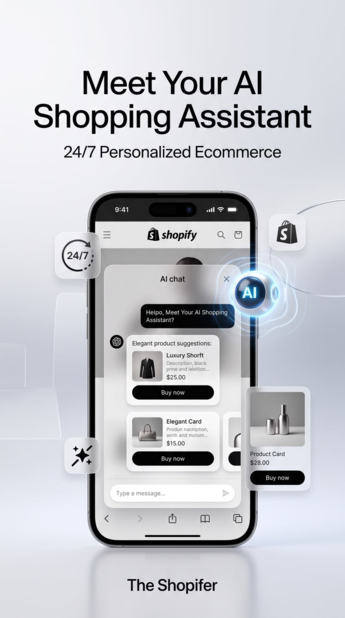
John asked whether AI shopping agents are mostly hype. Sharon didn't hedge: "I won't even say it's coming, right? It's here."
Her way of making sense of it is refreshingly simple. Treat AI agents like "the algorithm" marketers have talked about for years. Humans built these platforms to support human behavior, so the practices that helped you show up in the algorithm still apply. The goal is to help agents understand who you are so they can connect you with the right shoppers.
The good news is for challenger brands. On Google, the biggest budget usually wins. With agents, Sharon believes the winners will be brands with a strategy, a great story, and content that is useful, educational, and entertaining, because platforms still measure engagement.
After 25 years in marketing, she's watched the channels change completely. When she graduated, the options were TV commercials, magazine ads, and radio. The channels have changed, but good messaging and positioning still win.
Find out what's working (and what isn't) in your marketing
Every SLTC engagement starts the same way Sharon described on the podcast: with an audit. Before we sign anything, we look under the hood at your website analytics, your Shopify store, your paid performance, and your email marketing. You'll get a clear read on what's working, what isn't, and where to put your next dollar.
If live shopping, a new ad channel, or a sharper brand story caught your attention, this is the fastest way to know whether it fits your brand.
Book your complimentary SLTC marketing audit →
Want the full conversation? Watch Sharon on Leaders on Shopify.
