
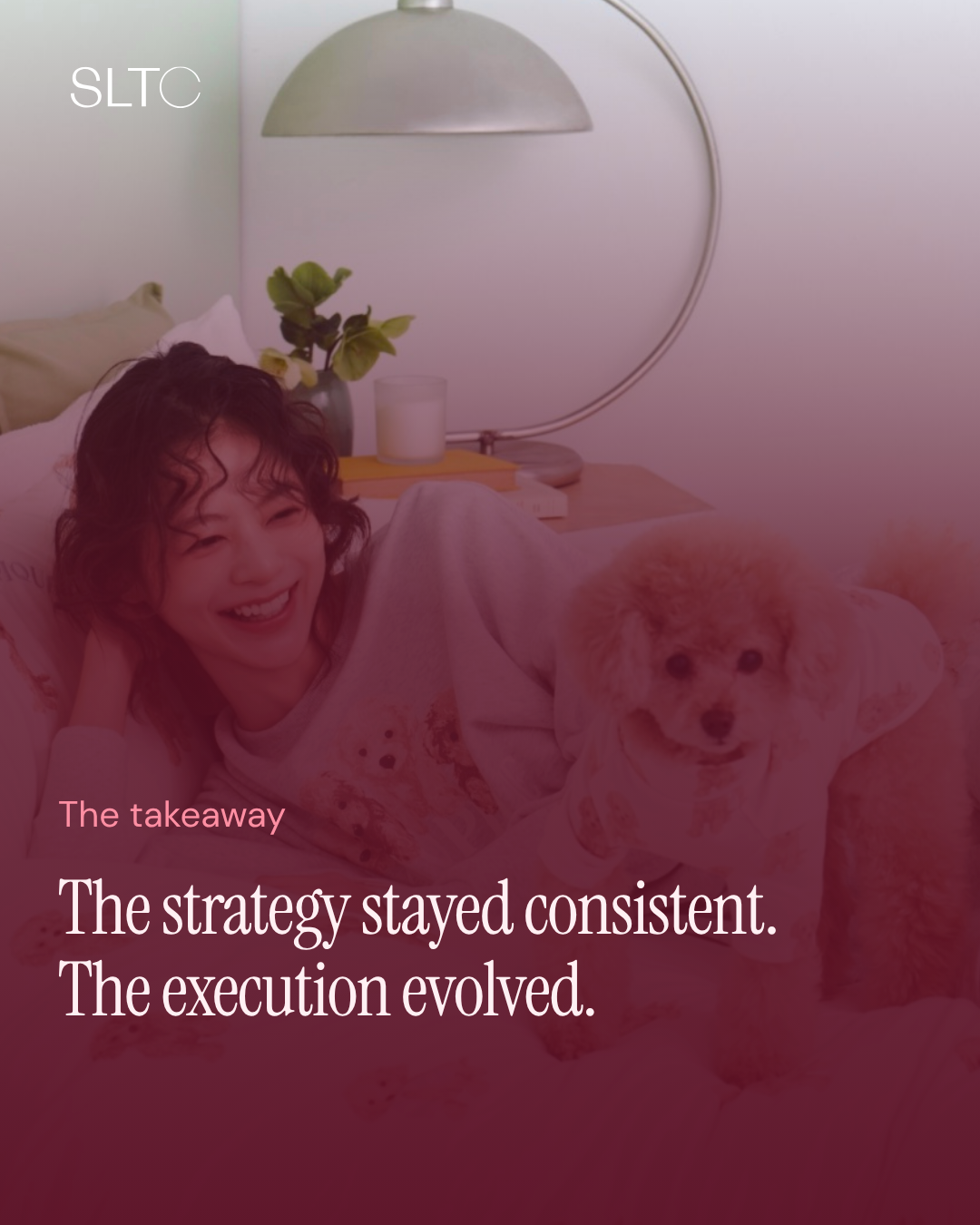
High-performing paid media is rarely the result of one breakout ad or a bigger budget. More often, it comes down to how quickly a team can recognize what is working, adjust what is not, and keep the strategy moving with customer behavior.
That was the case with Gelato Pique.
Rather than relying on a single tactic, SLTC focused on maintaining a thoughtful, adaptable approach to paid media, balancing ongoing optimization with a clear understanding of the brand's audience and business goals.
We sat down with Natalie Martin, SLTC Senior Digital Marketing Manager, to unpack the thinking behind the results, how performance evolved over time, and what brands should consider before assuming that increasing ad spend is the answer.
Q: Strong paid media performance doesn't happen by accident. What factors contributed to the results?
Natalie: One of the biggest factors was staying proactive and adaptable rather than relying on a single approach to drive performance.
Paid media requires ongoing attention. What performs well at one point may not deliver the same results later, so it's important to continuously evaluate performance and make informed decisions.
For Gelato Pique, our focus was on understanding the data, recognizing opportunities, and maintaining a strategy that could evolve alongside customer behavior.
Ultimately, strong results come from consistent optimization and thoughtful decision-making, not simply launching campaigns and hoping for the best.
Q: Many brands use a 2x to 4x ROAS as a working benchmark. What does it take to perform well above that range?
Natalie:
It comes down to ongoing optimization and understanding what the data is telling you.
We consistently reviewed performance, evaluated creative effectiveness, and made adjustments based on emerging trends and customer engagement.
One of the biggest lessons is that what works today may not work tomorrow. Consumer behavior changes, market conditions shift, and creative can lose effectiveness over time.
The key is maintaining a clear strategy while remaining flexible enough to respond to those changes.
That balance helps brands sustain momentum without relying on the same approach indefinitely.
Q: How can brands maintain strong performance while being more intentional with their advertising investment?
Natalie: One of the biggest misconceptions about paid media is that spending more automatically leads to better results.
While investment matters, efficiency is just as important. Brands need to understand how their advertising contributes to broader business goals and whether their efforts are delivering meaningful value.
For Gelato Pique, we remained focused on performance efficiency and making informed decisions as conditions evolved.
It's a reminder that effective paid media management isn't necessarily about doing more. It's about understanding what's driving results, identifying opportunities to improve, and making every investment more intentional.
Q: What do you tell a client whose first instinct is to cut the budget after a dip in revenue?
Natalie: Every month will look a little different. Seasonality, promotions, and consumer behavior all play a role, so we need to understand what is driving the change before reacting to it.
In April, spend was down significantly year over year, but revenue did not decline at the same rate. The efficiency of the campaigns actually improved.
If we had panicked and made drastic changes immediately, we might have hurt performance more than helped it. Sometimes the right answer is to make a change. Sometimes it is to stay the course. The key is understanding the data before reacting.
Q: If a brand has never seen a ROAS above 5x, what would you examine first?
Natalie: First, I would look at the creative. A lot of brands run the same ads for months and then wonder why performance is not improving. Creative fatigue is real, and customer behavior changes.
Second, I would examine campaign structure and budget allocation. Is the budget supporting what is actually driving results, or is it being spread too thin?
Finally, I would look at what happens after someone clicks. Even a strong ad cannot overcome a poor landing-page experience.
Most of the time, there is not one major problem. It is a collection of smaller issues that add up and limit performance.

The bigger lesson: keep the strategy steady and the execution responsive
Gelato Pique's results reinforce a principle that applies well beyond one account: performance marketing should be actively managed, not simply activated.
The strategic objective did not need to change every month. The execution did.
That meant refreshing creative before fatigue set in, following revenue rather than vanity metrics alone, and treating reporting as a decision-making tool, not a document created after the fact.
As Natalie put it: “Good reporting should drive decisions, not just document performance.”
Ready to get more from your paid media investment?
More budget cannot solve weak creative, poor campaign structure, or a disconnected customer journey. The right next step is understanding which part of the system is limiting performance, and building a plan around it.
Book a 2026 Growth Planning Call to explore how SLTC can help your team turn paid media data into smarter growth decisions. Not ready to chat yet? Check out our performance marketing case studies to envision what’s possible.
Results note: Performance reflects this specific account, campaign mix, attribution setup, and reporting period. Individual results vary.
